|
Thank you, from the BaitShop Boyz! |
Coyotes: The Great Adaptors |
Post Reply 
|
| Author | |
TasunkaWitko 
Administrator 

aka The Gipper Joined: 10 June 2003 Location: Chinook Montana Status: Offline Points: 14753 |
 Post Options Post Options
 Thanks(0) Thanks(0)
 Quote Reply Quote Reply
 Topic: Coyotes: The Great Adaptors Topic: Coyotes: The Great AdaptorsPosted: 08 September 2006 at 09:22 |
|
Coyotes: The Great Adaptors By Diane
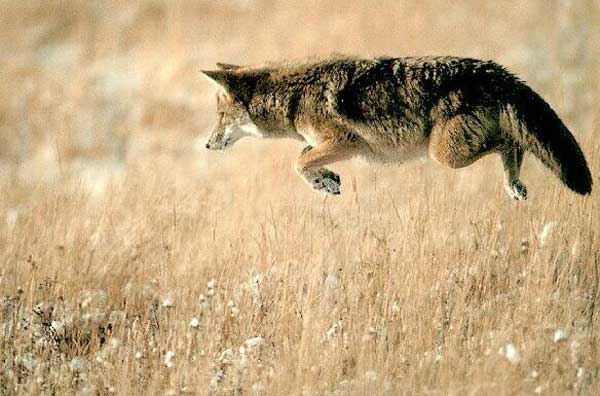
Coyotes, the great adaptors, were quick in the past 100 years to take over habitat vacated by wolves. In doing so, they also took on a share of the natural ire that rural-dwelling Montanans feel when faced with threats to domestic stock and pets.
The bushy-tailed coyote has survived that ire by being extremely adaptable and resilient.
Coyotes generally weigh 20 to 35 pounds with rich fur coats that some hunters and trappers find very attractive. It is slim and agile with erect ears, a pointed muzzle and slanting eyes. Coyotes are so adaptable that they can live in packs, mated pairs or as single nomads. Pups are born helpless and blind in mid to late April after a 63-day gestation period. Generally, from a litter of 4-9 coyote pups only a couple will survive their first year of life.
The rural coyote’s preferred diet includes voles, jackrabbits and such, though it will find alternatives if necessary. Coyotes in rural settings generally hunt singly or in pairs, and populations can increase rapidly when food is abundant.
Coyotes adapt readily to landscapes altered by humans and fill a niche that few other predators can. For example, coyotes inhabit urban settings including Denver, Fort Worth, Chicago, and Washington, D.C. Researchers have caught and tagged more than 200 coyotes in the Chicago area and they estimate as many as 2,000 coyotes may be living in vacant lots, landscaped areas around commercial buildings and along water and roadways.
Research on coyotes in
Coyotes in
Coyotes have had eons to hone their adaptability. Some taxonomists say that by the late Pliocene, 5.4 – 2.4 million years ago, the ancestral coyote, canis lepophagus, was widespread throughout
For more on coyotes, see the online Montana Field Guide on the FWP web site at fwp.mt.gov under Wild Things.
Living Successfully With Coyotes
If you are interested in observing coyotes to learn more about them, it is best to keep your distance and use binoculars.
Coyotes usually dig their own dens, but will sometimes enlarge an old badger hole or make use of a natural hole in a rocky ledge. A den is usually hidden from view but can be located by the trails that lead away from it.
Coyotes have a good sense of smell, vision and hearing. These qualities, combined with their natural evasiveness, give them a survival edge. They may lose that edge if they become accustomed to finding food around people and their residences. Coyotes that find that food can be easily obtained around humans are likely to get into trouble seeking out those foods. They are also likely to come in contact with pets, particularly domestic cats, eat garbage and come unacceptably close to homes or people on foot. Inevitably, when coyotes and humans come into conflict, the coyotes lose.
Here are some things that the U.S. Department of Agriculture recommends to reduce the chances of a conflict with a coyote:
· Do not feed coyotes · Eliminate easily accessible water sources · Avoid feeding birds, squirrels or chipmunks · Secure all garbage behind locked doors or in wildlife proof containers · Feed pets indoors and store pet and livestock feed where it can not be accessed by wildlife · Trim shrubbery at ground level to eliminate potential cover for coyotes or their prey. · Deter coyotes, if necessary, with fencing that is at least six feet high and at least six inches below ground level · Avoid leaving small children unattended outdoors if coyotes have been seen in the area. · Safely confine all domestic pets, especially small ones · Provide secure shelters for poultry, rabbits and other vulnerable animals · Walk your dogs on a leash in the outdoors and always accompany your pet outside at night
By making life in your neighborhood more difficult for a coyote, you will increase the odds that area coyotes will live natural lives and not become involved in conflicts with humans, domestic pets or livestock.
RF Edited by TasunkaWitko |
|
|
TasunkaWitko - Chinook, Montana
 Helfen, Wehren, Heilen Die Wahrheit wird euch frei machen |
|
 |
|
|
Post Reply
|
|
 Tweet
Tweet
|
| Forum Jump | Forum Permissions You cannot post new topics in this forum You cannot reply to topics in this forum You cannot delete your posts in this forum You cannot edit your posts in this forum You cannot create polls in this forum You cannot vote in polls in this forum |


 Topic Options